


GROUP SOCIAL AND ETHICS COMMITTEE REPORT

As a socially conscious organisation, Super Group understands that its actions reverberate beyond the boardroom, impacting the communities in which it operates. The purpose of the Social and Ethics Committee is actively supported and widely shared by the business – to uphold the principles of responsible business practice, sustainability and societal impact while striving to create long-term value for our stakeholders.
Climate change is one of the most pressing issues affecting the value creation capability of organisations across the world. According to climate scientists, July 2023 marked the hottest month on record across the globe. As the global climate shifts, companies like Super Group face a range of challenges and opportunities that directly affect their financial performance, reputation and long-term viability.
The Group has made good strides in understanding and tackling the risks associated with climate change. More than ever, this is evident in the way the Group thinks and the manner in which it acts. The committee was pleased to see an ESG perspective firmly embedded in everything from business continuity planning and risk management to operational excellence and CSI initiatives.
In true Super Group fashion, the business is tackling climate change in a manner that is at once pragmatic and ingenious. Environmental initiatives not only help save the planet, but are also a source of competitive advantage – driving cost savings and unlocking efficiencies. Read more here.
|
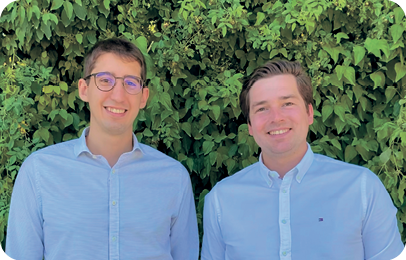
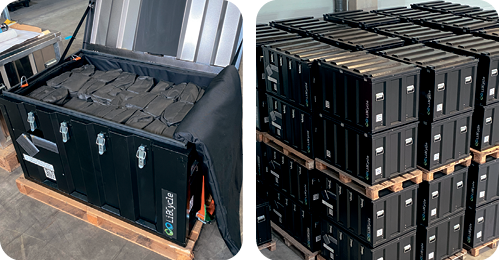
Environmental awareness also presents opportunities to create new revenue streams, Super Group’s partnership with LiBCycle being a prime example. LiBCycle is a startup with a vision to make the recycling of lithium-ion batteries in Europe sustainable and efficient. The business provides an innovative, comprehensive solution for the transportation of lithium-ion batteries, including specially developed packaging. The idea for LiBCycle was born in 2020 at the Technical University of Munich where the two young founders, Philipp Brunotte and Áron Németh, were studying. Philipp studied mechanical engineering and management and represents the entrepreneurial heart of the company. Áron studied mechanical engineering and is the technological brain. Together they realised their vision to develop a box that simplifies the transport of lithium-ion batteries. Having successfully patented their design, they engaged with Super Group’s inTime business as a potential investor – culminating in LiBCycle becoming part of the Group in June 2021. Intensive work was undertaken to develop several prototypes, all of which were rigorously evaluated by the European automotive industry. Based on the findings regarding size and shape, the first transport box was finally developed and approved by the German authorities. The business already boasts a leading German car manufacturer as a client, with many more set to follow. Read more about this exciting venture at www.libcycle.com. |
|
|
|
The committee was pleased to see the rigour and discipline Super Group has applied in improving the monitoring, measuring and recording of key metrics related to environmental performance (view a snapshot of key metrics). Leveraging technology and partnering with market leaders has improved ESG disclosure and helped the Group better understand and communicate its global environmental performance and impact. Super Group continues to partner with Greenstone to collect, manage and analyse its environmental data. Greenstone provides sustainability, supply chain and ESG software solutions to clients across 15 industry sectors in over 100 countries worldwide.
Our long-term partnerships with market leaders such as Greenstone and Risk Insights help the Group to stay abreast of evolving requirements and to benchmark itself against those who are spearheading the transition to a green economy.
To track the progression of its sustainability journey, Super Group partners with Risk Insights, Africa’s first machine learning and artificial intelligence ESG sustainability rating tool. The tool measures and rates the long-term sustainability of companies based on their ESG disclosure and more than 200 global ESG best practice frameworks, country laws and regulations, and IFRS reporting standards. I am proud to report that Super Group has maintained its good rating. This reaffirms the Group’s dedication to environmentally sustainable business practices and serves as a strong incentive to further enhance its efforts.
Super Group’s commitment to fostering a culture of integrity and empathy is most visible in its CSI efforts. Amounting to an investment of over R26.4 million (2022: R21.1 million), these initiatives actively address urgent societal challenges such as education, unemployment, hunger and healthcare. With employees actively involved and relationships that span decades, the Group’s CSI efforts go beyond mere financial contributions; they embody a genuine desire to make a meaningful and lasting impact on communities. Read more here.
Embracing diversity and creating an inclusive work environment are also vital components of the Super Group culture. The committee oversees the Group’s people practices and initiatives to promote gender equality, inclusivity and representation across all levels. The Group retained its Level 2 B-BBEE accreditation, with Black employees now representing 89% (2022: 85%) of the South African workforce and 81% (2022: 78%) of South African management employees. Read more here.
Training and skills development play a pivotal role in Super Group’s success. Investing in employee training not only enhances an employee’s expertise and efficiency but also boosts their confidence, job satisfaction and loyalty. A well-trained workforce is better equipped to handle complex tasks, problem-solving and decision-making, leading to improved productivity and operational efficiency. Moreover, by providing ongoing training opportunities, Super Group fosters a culture of continuous learning and innovation, attracting top talent and retaining valuable employees.
In today’s rapidly evolving business landscape, staying competitive requires a workforce that is adaptable, knowledgeable and capable of tackling new challenges.
In 2023, 41% (2022: 42%) of the Group’s employees received training and more than 3% of payroll cost was invested in skills development initiatives, including learnerships, apprenticeships and management development programmes. Designed to equip individuals with the expertise necessary to excel in current and future roles, formal programmes at higher education institutions are an important part of the training curriculum. Together with on-the-job training, workshops and mentoring, these initiatives cater to diverse learning styles and needs.
The Group’s skills development strategy also ensures that disabled learners participate in skills development programmes. In one such initiative, 65 (2022: 54) disabled African women were recruited to participate in the Group’s contact centre learnership programme. This brings the number of women who have graduated from this programme to 119.
The Group’s unwavering commitment to the safety and well-being of its people, both on the roads and within its operations, remains paramount. The state of South African roads continues to present a significant threat to our employees, with road accidents still the leading cause of workplace fatalities and injuries. It is with sadness that I report one road accident-related fatality. The committee extends its heartfelt condolences to the family concerned.
We remain focused on mitigating risks and promoting safer road practices. To address this challenge, our drivers undergo rigorous training to enhance their skills and awareness, and technology is actively deployed to monitor and guide driver behaviour. While the business has seen positive outcomes from these measures, it is unfortunate that certain contributing factors remain beyond its direct control. The Group will continue to invest in employee training, leverage technology and collaborate with relevant stakeholders to address road safety challenges in a comprehensive manner.
Over the past year, the total number of accidents decreased from 549 to 526. With the aim of proactively preventing their recurrence, the committee closely oversees the diligent work across the business to investigate the root causes of all accidents. The primary focus remains on minimising accidents and injuries by continuously refining safety procedures and incorporating the latest insights from the investigations.
The committee ensures the consistent review and update of the Group’s occupational health and safety protocols. This drives adherence to industry-leading best practice. By embracing this approach, Super Group is proactively developing a culture of safety that permeates every level of its operations, empowering all employees to prioritise safety as a core value.
In the coming year, the committee will be focusing on:
- Strengthening our response to climate change and further enhancing ESG reporting to provide clearer insights into the Group’s sustainability efforts and progress.
- Collaborating with local communities to identify CSI projects that address their specific needs and concerns, ensuring initiatives remain impactful and sustainable.
- Expanding employee wellness programmes to promote a healthier and more inclusive workplace, fostering a sense of belonging and pride among our workforce.
| Using technology to keep our drivers and all road users safe |
|
|
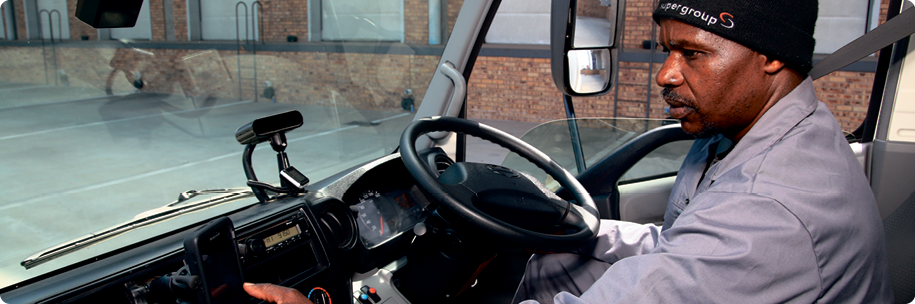
With the aim of keeping our drivers and all road users safe, Super Group uses various technologies to track and improve driver behaviour. As a standard, all vehicles are fitted with state-of-the-art telematics systems that ensure driver and road user safety and well-being, protect Super Group assets and safeguard customers’ cargo. These systems combine GPS technology, onboard diagnostics and various sensors to collect data on vehicle and driver performance – tracking metrics such as speed, acceleration, braking, idling time and location. On-board technology hardware includes:
AI in-cab cameras are installed in much of the Super Group fleet. These AI-powered “smart dash cams” detect risky behavioural patterns and alert both the driver and operations to driver fatigue, mobile device usage, smoking, eating and distracted driving. Such early detection is key to preventing accidents and ensuring driver safety. The data collected from these technologies is analysed to identify trends and patterns in driver behaviour and predictive analytics is applied to anticipate potential issues or unsafe behaviour. For example, this data can be used to predict when a driver is at risk of fatigue or when a vehicle is due for maintenance. The insights are used for training purposes, enabling the Group to give drivers targeted coaching and feedback to drivers to improve their skills and safety. The in-cab systems use dedicated eye-tracking hardware, such as infrared sensors, to detect changes in the driver’s pupil size, gaze direction and blink rate and track eye movement, facial expressions and head posture to assess alertness. These systems can precisely track where the driver is looking and detect if their eyes are closing or if they are not focusing on the road. They are particularly effective at night or in low-light conditions. Advanced computer vision algorithms analyse video footage of the driver’s face to detect signs of drowsiness. Super Group’s stringent vehicle replacement programme ensures that its fleet is kept up to date with the latest safety features. These include stability control, active brake assist, roll control, lane assistant, proximity control, driver airbags and advanced retarder functions that assist in slowing down the vehicle without relying solely on the brakes. |
In conclusion, I express my gratitude to my colleagues on the committee, the dedicated executive leadership team and the entire Super Group community for their unwavering commitment to generating sustainable value for all stakeholders. Your collective efforts serve as a shining example of the extraordinary possibilities that arise when individuals collaborate to make a positive impact on the world.
Pitsi Mnisi Chairperson of the Group Social and Ethics Committee
29 September 2023