


DEALERSHIPS IN FOCUS
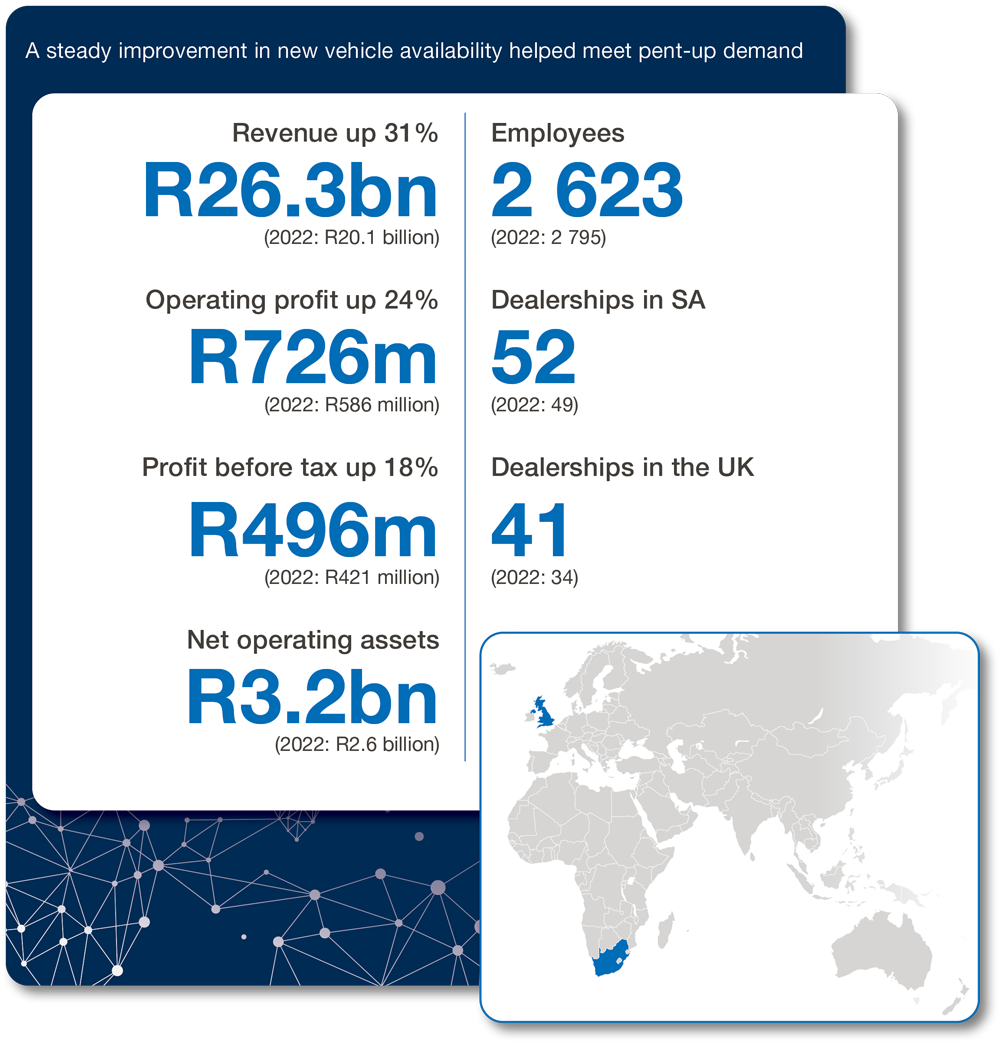
DEALERSHIPS SA | UNPACKING THE 2023 PERFORMANCE
| MARKET DEVELOPMENTS
A volatile macroeconomic environment impacted the business and its key stakeholders. Exacerbated by loadshedding, inflation and interest rate hikes placed the consumer under growing pressure – eroding buyer confidence and reducing discretionary spend. Consumer behaviour saw a distinct shift as a result, with people holding off on the purchase of a new vehicle or opting for a more affordable brand or model. Manufacturers and suppliers also faced loadshedding-related disruptions and cost increases, with alternate energy sources adding significant cost and smaller operators struggling to absorb the investment required to remain fully operational. Supply chain disruptions persisted and scarcity of key components, delivery delays and extended lead times remained problematic. Although the semiconductor shortage eased, shortages of certain brands and models persisted. Asian and Indian automotive brands delivered enviable growth. Alongside stalwarts such as Toyota, Ford and Isuzu, the ability of brands such as Chery, Haval, Omada and Suzuki to provide affordable yet reliable vehicles made them particularly attractive in emerging economies, where demand for affordable transport options is high. These OEMs have focused on producing affordable yet feature-rich vehicles, adapting their products to suit local conditions and preferences. |
HOW THE STRATEGY POSITIONED THE BUSINESS TO LEVERAGE A VOLATILE TRADING ENVIRONMENT
Dealerships SA remained well positioned to manage the risks and leverage the opportunities inherent in a volatile and evolving trading environment.
|

A: Dealerships SA successfully maintained its market share and achieved growth in key sectors, growing its representation of value and volume brands. We successfully weathered the used vehicle value adjustment cycle and kept working capital costs low. A strong aftermarket parts and service performance supported growth. The enhancements made to our digital trading platform strengthened the business’ digital capabilities, augmenting the sales pipeline and improving customer communication and retention.
A: Inflation and interest rate hikes placed the consumer under growing pressure, with many delaying their purchases or choosing more affordable brands or models. Loadshedding further burdened consumers and manufacturers, with supply chain disruptions continuing as a result. Rand weakness increased the costs of new vehicles and parts.
A: The business is well positioned to manage market volatility. An experienced management team, lean cost structure and excellent management of working capital are key to growth in a volatile market. We have longstanding relationships with key OEMs and technology solutions that ensure an interactive customer journey. Dealership facilities are of the highest quality and further enhance the customer experience, underpinning a relentless focus on service quality.
A: The division will continue to grow its representation of volume and value brands. Multi-brand dealerships remain integral to optimising our dealership footprint. Delivering consistent customer experiences and service excellence, along with ongoing implementation of customer-centric technology solutions, is critical. Maintaining a lean cost structure and excellent management of working capital is a given.
A: Our performance was underpinned by strong new vehicle sales volumes, which increased by 19.1%, strongly outperforming the National Association of Automobile Manufacturers of South Africa (NAAMSA) growth of 10.1%. In spite of the used vehicle market coming under pressure over the past year, the division maintained the sales volumes achieved in the prior period.
Operating profit increased by 20.7% and operating margins increased from 3.7% to 3.9%, mainly due to a stronger contribution from the new vehicle sales and associated finance business, ongoing cost containment and a good aftermarket parts and service performance. The profit contribution from used vehicle sales declined marginally as a result of lower volumes and weaker used vehicle margins.
The business continued to grow its representation of volume/value brands and establish multi-brand facilities, enabling it to meet resilient consumer demand despite ongoing shortages of certain brands and models. Technology remained the foundation of service excellence and was key to superior customer experience and sales pipeline development.
A: With the consumer expected to remain under pressure, the year ahead is set to be a challenging one for the South African dealership market. Alongside the impact of inflation and interest rate hikes, supply chain and manufacturing disruptions look set to persist. As a result, consumers will continue to delay their purchases or opt for more affordable brands or models.
The business remains well positioned, however, to mitigate the volatile trading environment and leverage the opportunities it presents. The management structure will remain compact and agile, with an unrelenting focus on maintaining a lean cost base and excellent management of working capital. Dealerships SA will also continue to grow its representation of volume and value brands and further leverage its dealership footprint, with a focus on geographic synergies and multi-brand facilities. Technology will remain key to superior customer experience, service quality and a robust sales pipeline.
Supported by strong contributions from services and ancillary products, resilient demand for new vehicles and aftermarket services should position Dealerships SA well to deliver another good performance.
FINANCIAL PERFORMANCE

| Reaping the benefits of multi-brand facilities |
|
|
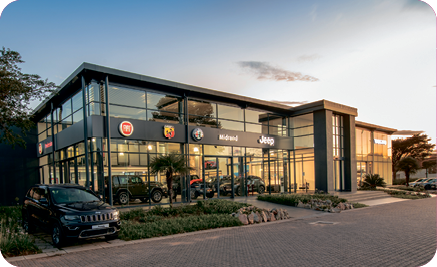
Dealerships SA’s multi-brand strategy offers several benefits – providing increased market opportunities and risk diversification, while offering customers a convenient one-stop-shop experience and access to a wider range of vehicle choices. By leveraging multiple brands, the business can optimise revenue potential and better adapt to changing market dynamics. One of the key advantages is the ability to cater to a diverse customer base. By representing multiple brands, the business can access a range of market segments and offer a wider range of vehicles to suit various customer preferences. This allows Dealerships SA to capture a larger share of the market and increase revenue streams. A multi-brand strategy also provides a degree of protection against market fluctuations. If one brand or model experiences supply challenges, for example, the business can rely on the other brands/models within its portfolio to mitigate any potential losses. From a consumer perspective, multi-brand franchising offers greater convenience and choice. Instead of having to visit different dealerships or locations to explore different brands, customers can find a variety of options under one roof. Multi-brand dealerships also benefit from economies of scale, allowing them to offer competitive pricing, attractive financing options and comprehensive after-sales services, ultimately enhancing the overall customer experience. |
| Enhancing the customer experience and bolstering the sales pipeline with an innovative digital trading platform |

|
|
Dealerships SA’s integrated digital platform provides numerous benefits to the business and its customers, ultimately streamlining the sales life cycle, enhancing customer communication and driving growth in a highly competitive industry. The seamless integration of databases within the platform enables better segmentation of customer data, allowing the business to analyse customer preferences, purchasing history and other relevant data, and to use these insights to tailor its marketing strategies and offer personalised experiences to customers. This targeted communication leads to higher customer engagement and improved conversion rates, boosting sales and revenue. The end-to-end digital platform automates lead generation processes and workflows, reducing manual effort and human error. It also facilitates efficient lead tracking and follow-up, ensuring that no sales opportunity is missed. Automation allows sales teams to focus on building relationships with customers, providing better support and closing deals rather than getting bogged down by administrative tasks. The platform provides various channels for communication, including email, chat and social media integration. Customers can easily connect with support, ask questions and receive prompt responses. This transparent and responsive communication builds trust and loyalty, fostering long-term relationships. |
DIVISIONAL RISKS
Volatile macroeconomic environment that places the consumer under growing pressure – eroding buyer confidence, reducing discretionary spend and changing consumer behaviour
- Relentless focus on service quality and the customer experience.
- Growing representation of volume and value brands and multi-brand dealerships.
- Compact management structure enables decisions to be made quickly, keeping the business agile and resilient.
- Maintain lean cost structure and good working capital management.
- Invest in digital solutions that bolster the sales pipeline and improve customer retention.
Supply chain constraints and disruptions
- Maintain strong OEM relationships and flexible order structures across product lines.
- Limit customer migration through ongoing communication and an ever-improving mix of premium luxury and value/volume brands.
The environmental evolution of the automotive industry – and growing shift to electric vehicles – often fails to consider the emerging market realities of Africa and other similar economies
- Strong OEM relationships ensure an understanding of their electric vehicle strategy and how they intend to serve the African consumer in the short to medium term.
- Ensure that the business will be an early adopter and supporter of OEM electric vehicle initiatives.
- Represent brands and product range that meet the value requirements of consumers and the economy.
DEALERSHIPS UK | UNPACKING THE 2023 PERFORMANCE
MARKET DEVELOPMENTS
|
HOW THE STRATEGY POSITIONED THE BUSINESS TO LEVERAGE A VOLATILE TRADING ENVIRONMENT
|

A: New vehicle volumes increased by 39.9% as the availability of stock improved over the second half, which compared favourably with the UK passenger and light commercial vehicle market growth of 11.9% over the same period. Used vehicle sales volumes increased by 29.0% as used vehicle stock availability also improved. Departmental profitability was increased and staff retention improved.
A: The volatile macroeconomic environment and protracted supply chain disruptions were the primary business disruptors.
A: The business is strategically positioned to effectively manage market fluctuations, maintain an efficient cost structure and excel in managing working capital. We have longstanding relationships with key OEMs and excellent relationships with new partners.
Ensuring customers are equipped to make the best buying decision is the foundation of our unwavering focus on service quality. Together with a face-to-face approach, technology solutions ensure a seamless and enjoyable customer experience. Data-driven operations ensure we maximise opportunities and reduce risk.
A: In the year ahead, our focus will be on growing fleet partnerships, expanding OEM representation and fully integrating the operations of newly acquired businesses.
Optimising the performance of newly introduced brands is also a strategic imperative. The UK dealerships have made significant progress on one-stop commercial platforms across funding, maintenance and insurance products and will continue to drive progress in this area.
A: The Dealerships UK footprint continued to grow as a result of strategic acquisitions in selected brands and key locations. Six dealerships – one Ford, one Suzuki, two Kia and two Hyundai – were added in the first half of the year with a further Suzuki business being added in the second half.
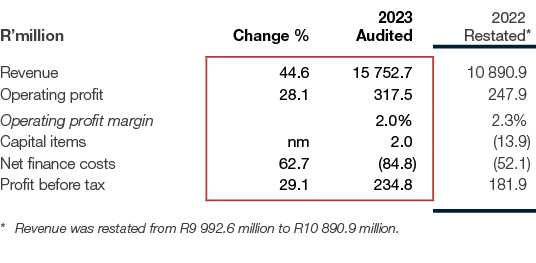
The division performed well in the year under review, reporting a 29.1% increase in profit before tax, despite the pressures of continued inflation and higher interest rates negatively impacting general consumer confidence across the United Kingdom.
The weakening of the average Rand against the GBP positively impacted the results by R13.7 million.
A: Improved availability of new vehicle stock will support a good performance, although the consumer remains under financial pressure from interest rates at historic highs. The demand for used vehicles will continue to decline as new vehicles become more readily available, with lower margins being realised as a result. Strong demand for commercial vehicles will support performance in the year ahead.
FINANCIAL PERFORMANCE
| Digital platforms streamline and simplify vehicle ownership |

|
|
The UK dealerships have made significant progress with one-stop commercial platforms across funding, maintenance and insurance products. These comprehensive digital platforms streamline and simplify the various aspects of owning and operating commercial and personal vehicles, making it more convenient for individuals, businesses and fleet operators. Vehicle funding typically involves acquiring financing or leasing options. The Dealerships UK platforms provide various financing options, such as loans and leases, and connect consumers and businesses with financial institutions or leasing companies – making it easier to secure the necessary funding for their vehicle needs. Commercial vehicles, especially those in fleets, require regular maintenance and servicing to ensure they remain in optimal condition. Dealerships UK’s one-stop commercial platforms offer solutions to schedule and manage vehicle maintenance efficiently. These include features such as tracking service history, scheduling routine maintenance and providing access to a network of authorised service centres. Predictive maintenance and real-time monitoring have also been integrated to minimise downtime and costly repairs. The key benefits of the division’s one-stop commercial platforms across these three areas include:
|
DIVISIONAL RISKS
Volatile macroeconomic environment that places the consumer under growing inflation pressure with interest rates at historic highs
- Dealerships UK focuses on high levels of customer retention by utilising contract purchase products which drive reduced change cycles, thereby ensuring that macroeconomic risks are mitigated.
Supply chain constraints and disruptions
- Dealerships UK uses extensive data sources to ensure that the operation is able to balance supply constraints with increased growth.
The environmental evolution of the automotive industry – and growing shift to electric vehicles
- Extensive training has been undertaken to ensure the business is ready for the changes. While our brand partners are at various stages of development, our strategy is to grow only with brands that have a clear strategy for alternative fuelled vehicles (AFVs).
Services
The Services segment includes the Corporate and the Mauritius operations. The Corporate operations comprise the Group Head Office and IT functions of the South African operations. The Services segment reported an under-recovery of R48.8 million for the year. This deficit was mainly the result of increased interest rates over the year and the payment of a final closing dividend to the beneficiaries of the SG Tsogo Employee Empowerment scheme in the first half.
One-off non-operating items were reallocated to the Services segment in the previous year to better represent operating results within the business segments. These items included the proceeds of business interruption insurance claims emanating from the Covid-19 pandemic.