


SUPPLY CHAIN IN FOCUS
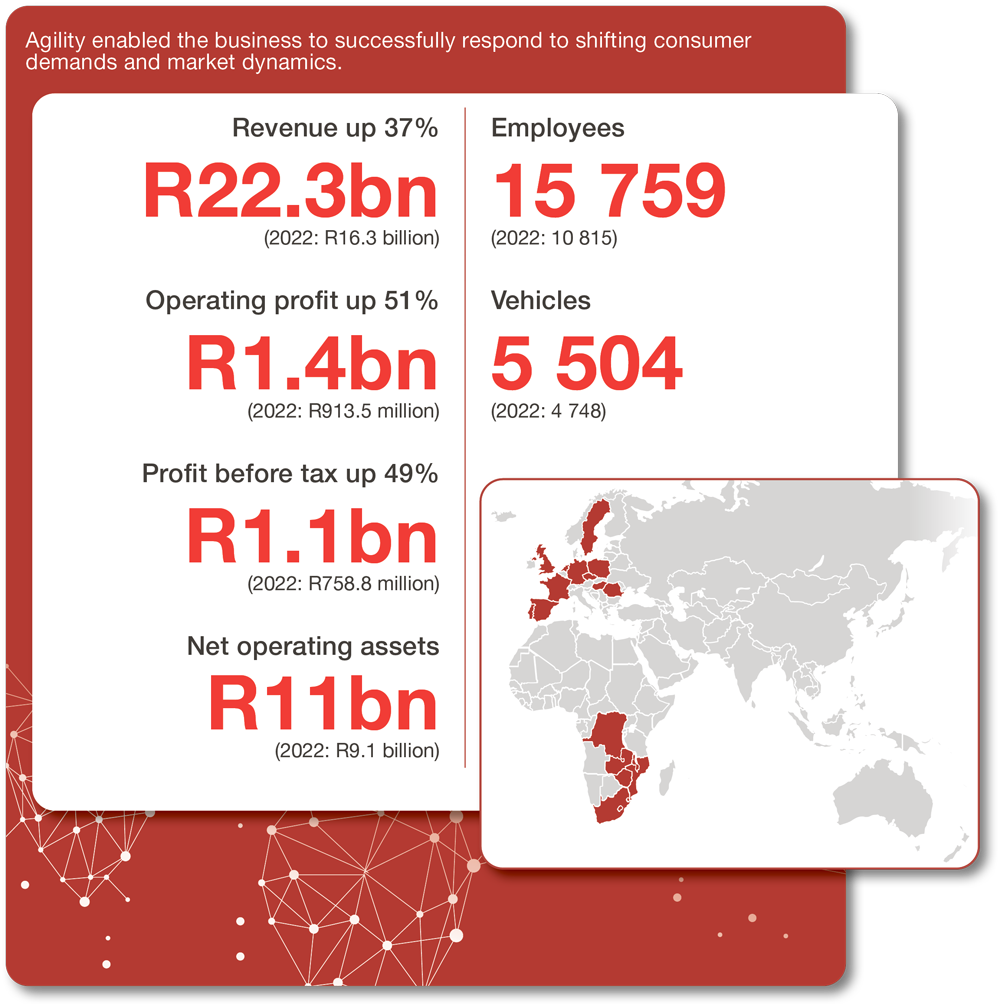
SUPPLY CHAIN AFRICA | UNPACKING THE 2023 PERFORMANCE
| MARKET DEVELOPMENTS
A volatile macroeconomic environment impacted the business and its key stakeholders. Exacerbated by loadshedding and record unemployment rates, inflation and interest rate hikes placed the consumer under growing pressure – eroding buyer confidence and reducing discretionary spend. Consumer behaviour saw a distinct shift as a result, with a trend towards “buy as you need” on a weekly basis rather than a large monthly shop. Shoppers also favoured the expanded product ranges and extended trading hours of smaller format stores, with formal retail experiencing a volume decline as a result. Recognising this shift, more formal retailers explored and entered the smaller format retail space. Smaller format stores moved beyond the provision of a basic basket of goods – such as bread and milk – and incorporated additional brands and products, including groceries, home and personal care items. Despite consumer pressures, spending on entertainment and at quick service restaurants (QSR), restaurants, canteens and hotels increased. In South Africa, loadshedding had a significant impact on manufacturing, with unreliable and inconsistent electricity supply creating numerous challenges and adding significant costs for manufacturers. Production lines often came to a halt or reduced their output, resulting in notable product shortages and price increases across a wide range of categories. Supply chain disruptions persisted, further constraining production. The limited availability and rising costs of materials such as sugar, glass and paper packaging exacerbated product shortages and price increases. To maximise efficiencies and minimise costs, customers increasingly sought for technology-enabled, integrated supply chain solutions. |
HOW THE STRATEGY POSITIONED THE BUSINESS TO LEVERAGE A VOLATILE TRADING ENVIRONMENT
The supply chain business remained well positioned to manage the risks and leverage the opportunities inherent in a volatile and evolving trading environment. A compact management structure enabled agile decision-making, with the swift transition of business models to capture opportunities and mitigate risk. Integration across operating companies minimised costs and unlocked shared business opportunities. Serving over 9 500 smaller format stores nationally, the consumer business benefited from the consumer shift away from formal retail. Alongside efficiency enhancing technology, this well-established footprint also appealed to formal retailers looking to expand into this channel. In addition to the positive impact of significant new business, volume declines in the formal retail sector were mitigated by the increasing volumes realised in smaller format stores. Technology-based solutions remained key to new business wins and client retention. The onboarding of new brands and product lines increased market share and helped mitigate the poor availability of other brands and products. Investment in fit-for-purpose assets drove efficiencies for the business and its clients and created capacity for further growth. The business benefited from increased consumer spending at QSR, restaurants, canteens, hotels and on entertainment. |

A: The division won significant new business, with the onboarding of new principals, additional brands and the expansion into new markets. The Group’s innovative technology was key to these wins as clients increasingly looked for solutions capable of delivering growth and cost savings. Our astute investments in fit-for-purpose infrastructure further bolstered operational efficiencies and created capacity for future growth.
The division’s commitment to sustainability was evidenced in the expansion of ongoing projects that will benefit both the planet and the bottom line through reduced costs and heightened efficiency. The strategic transition away from long-haul transportation remains a focus area, with the reallocation of the fleet to more profitable dedicated contracts.
A: Loadshedding had a major impact on production line outputs. This was exacerbated by limited availability and rising costs of input and packaging material, resulting in product shortages and price increases across a range of consumer goods. Long-distance transport remains under pressure.
A: Our extensive industry experience makes us adept at managing and leveraging market volatility. Our market-leading technology, world-class facilities, geographic reach and scale translate into customised solutions that are not easily replicated. This is evidenced in our longstanding customer relationships and leading market share in key sectors.
A: The focus remains on pursuing new business opportunities with both existing and new clients, encompassing new brands, product categories and markets. Technology will remain key to the competitive advantage our integrated, end‑to-end solutions will unlock for our clients.
Integration and collaboration across business units will further minimise costs and uncover shared business opportunities that support our growth objectives. The identification of complementary acquisitions to mitigate the risks of reduced organic growth is ongoing.
Optimising any investments in fit-for-purpose assets is also critical, in that it creates capacity for future expansion and allows for more innovative and effective client supply chain solutions. It goes without saying that sustainability informs our operational thinking regarding these assets. Whether it be a state-of-the-art warehouse or an expanded fleet, green solutions make the business more efficient and planet-friendly.
Developing succession plans for key positions and ensuring the workforce is adequately skilled for an evolving workplace is critical, as is maintaining strict overhead and margin management.
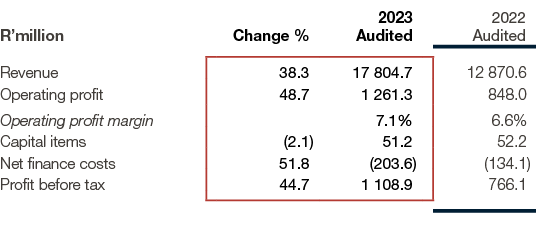
A: Supply Chain Africa delivered an excellent performance, with revenue increasing by 38.3% to R17.80 billion (June 2022: R12.87 billion) and operating profit increasing by 48.7% to R1.26 billion (June 2022: R848.0 million). Operating margin increased from 6.6% in the previous year to 7.1% in the current year and profit before tax increased by 44.7% to R1.11 billion (June 2022: R766.1 million).
Technology-based solutions in the consumer businesses contributed to significant new business wins and contract renewals. A diversified product basket and improving volumes in industries such as hospitality, entertainment and quick service restaurants also contributed to this strong performance.
Strong volume increases were experienced in the South African and African Logistics consumer and commodity transport businesses. The industrial businesses also performed well, with good sales and profit performances from SG Mobility, SG Freight and Super Rent.
A: Manufacturing and supply chain disruptions will continue to negatively impact product availability and prices. The Supply Chain Africa business remains agile and resilient, and a focus on strategic delivery is expected to yield a strong performance in the forthcoming financial year.
New business wins and contract renewals should continue to boost revenue growth in the consumer businesses, along with improving volumes in hospitality, entertainment and quick service restaurants.
Improved prices and volume increases across all commodities should continue to benefit the division, with low inventories and growing export volumes expected to maintain activity levels into the forthcoming financial year.
FINANCIAL PERFORMANCE
| Leveraging technology to anticipate, meet and exceed the demands of our principals and their consumers |
|
|
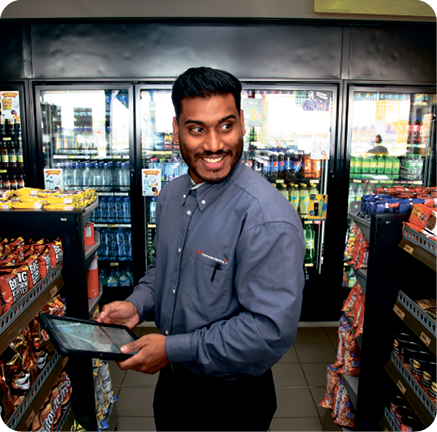
Super Group’s proprietary software, Cella, revolutionises supply chain solutions and enables principals to meet ambitious growth objectives. Guiding strategy and enhancing sales tactics, it provides seamless integration, visibility and valuable market intelligence. The Cella suite of innovative modules includes a state-of-the-art sales tool that provides representatives with real-time access to accurate information – including customer data, performance history and promotions. The app drives sales force behaviour, captures data and highlights growth opportunities. Orders are easily processed after thorough credit vetting and are monitored for intelligent route planning and delivery guidance. Cella also ensures full visibility and real-time reporting for controllers and drivers, and enables live monitoring and real-time decision-making based on driver progress. |
| A smart solution keeps our clients’ cargo safe |
|
|
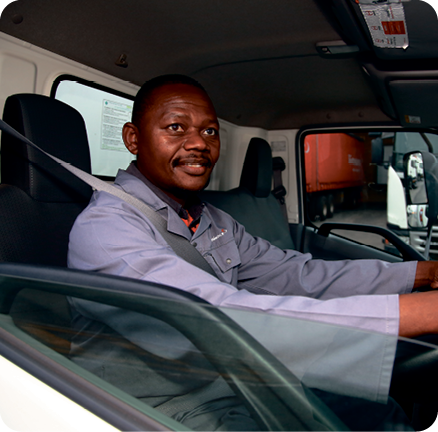
Super Group is proud to have developed and implemented another clever supply chain innovation – Cella SmartLocks. These electronic locks are fitted to vehicle cargo doors and can only be opened after verification that the vehicle is in an approved location. Upon arriving at a customer location, the driver requests that the doors be unlocked. The system then compares the request location against the delivery schedule and customer’s geolocation. If they match, an electronic signal is sent to the SmartLock to open. If they do not match, an alert is immediately sent to the control tower, who will contact the driver to determine why an invalid request was sent. Multiple cameras provide in-cab, road and vehicle surround views that keep the control tower in the know at all times. All requests, locks and unlocks are recorded for review and analysis. Lock statuses are fully visible on Cella. |
DIVISIONAL RISKS
Volatile macroeconomic environment that places the consumer under growing pressure – eroding buyer confidence, reducing discretionary spend and changing consumer behaviour
- Compact management structure enables decisions to be made quickly, keeping the business agile and resilient.
- Pursue new business opportunities with existing and new clients, encompassing new brands, product categories and markets.
- Develop integrated, end-to-end solutions that deliver client efficiencies and create new business opportunities.
- Continue to leverage technology to anticipate, meet and exceed the demands of our principals and their consumers.
- Optimise asset investment and drive integration and collaboration across business units to minimise costs and exploit shared business opportunities.
- Identify complementary acquisitions to mitigate the risks of reduced organic growth.
- Identify clients that are best positioned to expand in a low-growth environment and reduce exposure to clients that operate in high-risk environments.
Loadshedding
- Invest in alternate energy supply such as solar and battery, with generator backup (read more about the Group’s solar initiatives.
- Create flexible delivery solutions.
- Constant surveillance of fleet routes via control tower and utilisation of Cella and Waze to ensure the most efficient route to store (see the Cella “strategy in action” story below).
Supply chain constraints and disruptions
- Mitigate product shortages through the representation of multiple principals, brands and products.
- Use of forecast and demand planning tools.
- Strategic engagement with main customers to gain a better understanding of their future growth.
Disintermediation (for example, through retailers opening their own distribution centres)
- Identify international and niche local clients who do not indent directly to retailer distribution centres.
- Build the distributorship model with identified clients, ensuring greater revenue returns and long‑term partnerships.
- Pursue contract logistics opportunities.
- Develop integrated, end-to-end solutions that deliver client efficiencies and create new business opportunities.
- Continue to leverage technology to anticipate, meet and exceed the demands of our principals and their consumers.
Hijackings and cargo theft
- SmartLock system used on trucks so that load doors can only be opened in a specific geofence (read more on below.
- Vehicle and load tracking, with a 24/7 central tracking centre as well as multiple cameras providing in-cab, road and vehicle surround views.
- Anti-hijacking devices, specialised driver training and armed escorts for high-value products.
- Goods in transit insurance on all loads.
- Well-defined emergency procedures and protocols and ongoing employee training.
Criminal syndicates
- Well-defined procedures and protocols, with multiple levels of authority and segregation of duties, limits of authority and system access.
- Confidential whistle-blowing hotline.
- Daily cycle counts and monthly wall-to-wall stock counts.
- Daily risk reports, monthly security audits and regular internal audit reviews.
- Installation of additional cameras in our facilities and vehicles, armed escorts for high-value products, and insurance on all assets under our control.
SUPPLY CHAIN EUROPE | UNPACKING THE 2023 PERFORMANCE
| MARKET DEVELOPMENTS
A volatile macroeconomic environment impacted the business and its key stakeholders. Inflation and interest rate hikes placed the consumer under growing pressure – eroding buyer confidence and reducing discretionary spend. Supply chain disruptions persisted, further constraining production. This was particularly evident in the automotive sector, with an ongoing scarcity of key components, delivery delays and extended lead times. The war in Ukraine continued to affect the European economy, inflating commodity prices, prolonging supply-chain disruptions and affecting energy supplies. The economic impact of the war was felt especially strongly in Germany and central Europe, where energy-intensive industries struggled to remain competitive. Fears over global food supplies remained high amid risks to grain exports from Russia and Ukraine. |
HOW THE STRATEGY POSITIONED THE BUSINESS TO LEVERAGE A VOLATILE TRADING ENVIRONMENT
The ongoing evolution of the division’s business model ensured both relevant services and optimised cost structures. Operational enhancements such as the consolidation of shipments onto larger vehicles, higher average kilometres per load, and the recovery of increased diesel and other operating costs were key to growth. Strategic acquisitions supported growth. |
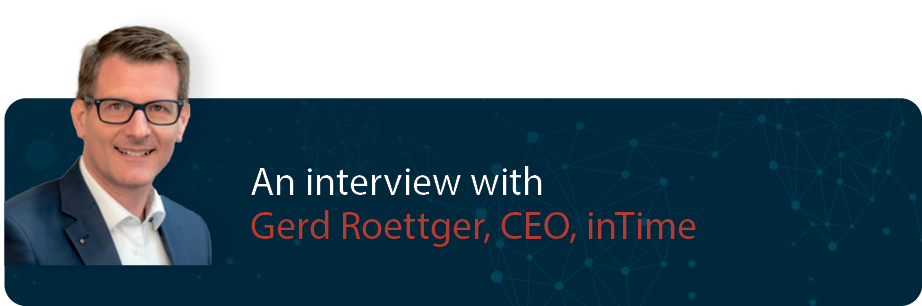
A: SupplyChain Europe has made significant strides in improving its overall performance. The division continues to evolve its business model to ensure both relevant services and optimised cost structures, and the benefits of these efforts are now evident in our financial performance. Our progress has also been driven by a number of value-accretive operational enhancements. These include the consolidation of shipments onto larger vehicles, higher average kilometres per load and the recovery of increased diesel and other operating costs
A: The German automotive industry is still struggling to recover from the blow dealt by the pandemic and disrupted supply chains. Although volumes have shown a significant improvement compared with 2022, production is still about 10% lower than in the first half of 2019 and reaching the pre-pandemic level of output may take a while yet.
A: The division’s market-leading technology and extensive industry experience set it apart from competitors, as do its longstanding customer relationships.
A: The diversification of the inTime customer base to mitigate the automotive industry dependency remains a strategic priority, along with the ongoing review of our business models to ensure resilience and relevance in line with fluctuating demand. Improved flexibility and enhanced electronic trading solutions will still be a significant focus over the next year. Maintaining strict overhead and margin management remains paramount.
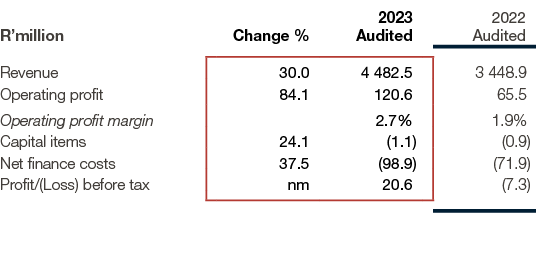
A: Supply Chain Europe’s overall performance improved considerably. Revenue increased by 19.7% in Euros and 30% in Rands, reflecting the ongoing evolution of the business model. Operating margin increased from 1.9% to 2.7%, driving an operating profit growth of 84.1%.
Ader acquired 75% of the shares in both T.I. and Delver in the north of Spain on 1 July 2022. These businesses provide last-mile distribution transport services, primarily within the temperature-controlled environment. Revenue from these acquisitions amounted to R366.0 million for the year.
inTime’s average turnover per transport increased by 22.8%, including an 8.8% increase in kilometres per transport, as a result of consolidating shipments. Overall European revenue increased by 30.0%, with inTime’s revenue increasing by 21.4%, Ader’s by 38.5% (including the acquisitions) and TLT’s by 38.8%.
Although off a small base, LiBCycle’s revenue increased fourteenfold, delivering its first profits since inception in October 2021. The innovative business provides a comprehensive solution to the automotive sector in Europe for the transportation and storage of lithium-ion batteries.
The weakening of the average Rand against the Euro had minimal impact.
A: A gradual improvement in the availability of new vehicles and automotive parts distribution volumes should bolster the performance of the European supply chain business. The division will maintain its focus on industry diversification, with further expansion expected in the agricultural and industrial parts sectors.
FINANCIAL PERFORMANCE
| The acquisition of Amco creates synergies between the European and UK operations |
|
|
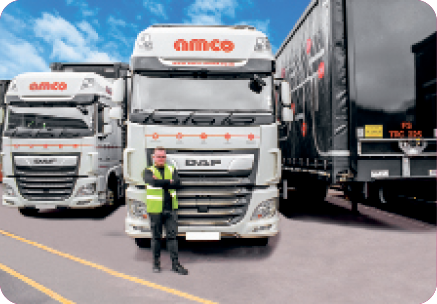
On 19 July 2023, Super Group announced its acquisition of 78.82% of the equity of CBW Group Holdings Limited (trading as Amco) for a purchase consideration of GBP30.3 million. The acquisition of Amco will significantly complement the Group’s supply chain offering, providing opportunities for market share gains across the UK and Europe. Headquartered in the United Kingdom (UK), Amco is a transport and logistics business and a leading provider of specialist land, air and sea logistics. Founded in 1983, the business has 11 UK operating locations and hubs strategically placed across Europe. Amco delivers its logistics services to over 250 active UK and European customers that operate in a diverse range of manufacturing sectors – including automotive, telecommunications, retail, construction, mining and FMCG. Amco harnesses a worldwide network of international partners, ensuring local knowledge and expertise. Their team includes highly experienced specialists, many of whom have previously worked in customer sectors such as automotive, waste, defence and FMCG markets. The business segment has high barriers to entry, with Amco well positioned as a result of its established OEM relationships, strategically located warehousing and investment in new value-added services such as e-commerce fulfilment, procurement and consulting. Read more at https://www.amco-group.co.uk/ |
| Ader acquires T.I. Transporte Inmediato |
|
|
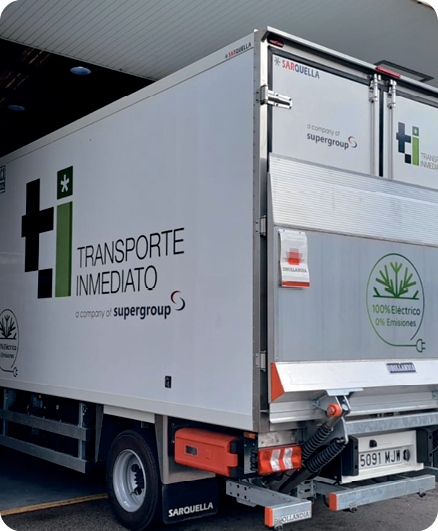
On 1 July 2022, Super Group Spain announced the acquisition of T.I. Transporte Inmediato. With a focus on the hospitality, food and pharma sectors, this logistics leader specialises in temperature-controlled, last-mile B2B and B2C services. The incorporation of T.I. positions the European Supply Chain division strongly in a strategic growth sector, increases its national presence and significantly strengthens its network. Headquartered in Navarra, Spain, T.I. was founded in 1997. With operations spanning 16 provinces, the business has over 300 employees and a fleet of more than 200 vehicles. With Ader already a leader in the Spanish market, this acquisition will further strengthen the portfolio of transportation, logistics and mobility solutions the Group offers in Spain. Importantly, the incorporation of T.I. will bolster the Group’s temperature-controlled last-mile capabilities. |
DIVISIONAL RISKS
Volatile macroeconomic environment, including rising transport costs due to increases in tolls and fuel prices
- Rigorous cost management.
- Leverage technology to deliver operational efficiencies and cost saving.
- Optimise vehicle utilisation and keep costs to a minimum.
- Agreement of new diesel price clauses with major customers, price increases in all other customer segments.
- Increases in fuel prices and toll fees are passed on to clients.
- Owned vehicle fleet is equipped with the latest diesel and exhaust technology, and company cars are steadily being converted to e-vehicles.
Growing competition from digital platforms
- Continuous enhancement of digital solutions
- Interface with key platforms and marketplaces
Shortage of skilled employees
- Business processes are further digitalised to reduce staffing needs.
- Developing an incentive model for hiring drivers.
- Identification of key employees with whom long-term perspectives and salary development plans are to be agreed.